


PRACTICE UPDATE: The Quality Migrant Admission Scheme Definitively Stated 2026-27
Posted in Musing, Special Programmes, The Hong Kong Visa Geeza /
The Quality Migrant Admission Scheme (QMAS) Visa Update | From Inception Until The Present Day

“Over three decades of legal advisory practice in Hong Kong have made one reality abundantly clear: the Quality Migrant Admission Scheme is not an administrative entitlement, but an active, highly selective talent-curation mechanism. Following the definitive structural overhaul of late 2024, securing an initial visa without a prior employment offer is merely the threshold to entry. If an applicant misunderstands the rigorous evidentiary demands of the 12-criterion assessment framework, or fails to establish substantive fiscal, professional, and physical ties within the HKSAR during their initial stay, the Immigration Department will not hesitate to refuse an extension. This update provides the unvarnished, definitive operational standard for navigating QMAS as it functions in practice. Make no bones; this visa can be hard to get and keep.”
— Stephen Barnes, The Hong Kong Visa Geeza
Executive Summary & Policy Orientation
The Quality Migrant Admission Scheme (QMAS) represents Hong Kong’s premier talent-acquisition entry route operating entirely outside the traditional requirement of securing prior local employment sponsorship or establishing an active, operating commercial business enterprise prior to arrival. Formulated and managed pursuant to the broad statutory discretionary immigration prerogatives granted to the Director of Immigration under Section 11 of the Hong Kong Immigration Ordinance (Cap. 115), the scheme is definitively not an open statutory entitlement. Rather, it functions as a highly competitive, state-directed demographic curation mechanism designed to enrich the human capital base of the Hong Kong Special Administrative Region (HKSAR).
Over two decades of active administration, QMAS has traversed multiple structural iterations: transitioning from a guarded, boutique annual ceiling of 1,000 entrants vetted by an external advisory body, into an aggressive, un-capped international talent funnel, culminating in the comprehensive administrative overhaul instituted on November 1, 2024. This current architecture formally eliminated the legacy 245-point scoring framework, substituting it with an objective, binary 12-criterion assessment system under the General Points Test (GPT) alongside an elite Achievement-based Points Test (APT).
By eliminating subjective self-scoring disputes and filtering submissions through a high-level Ministerial Assessment Panel chaired directly by the Secretary for Labour and Welfare, the contemporary QMAS regime operates with heightened scrutiny. It demands not merely paper-level administrative eligibility, but demonstrable strategic relevance to Hong Kong’s evolving economic imperatives. This practice update establishes the definitive legal, administrative, and strategic blueprint for QMAS practice in 2026–27.
Legislative History, Policy Milestones & Major Revisions
The structural evolution of QMAS serves as an accurate barometer for Hong Kong’s broader macroeconomic pivots, regional integration initiatives, and demographic pressures over the past two decades.
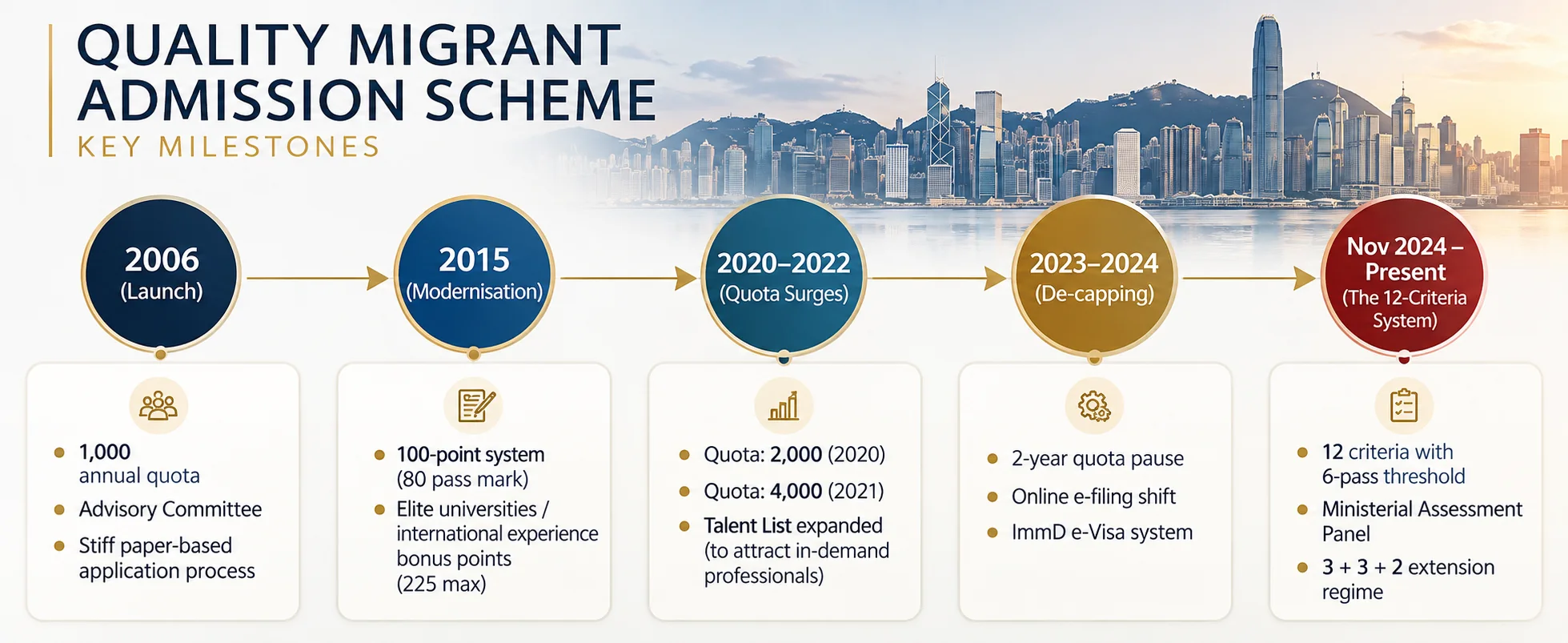
The Inception Era (June 2006)
Announced in early 2006 and officially launched by the Immigration Department (ImmD) on June 28, 2006, the scheme aimed to attract high-value talent to elevate Hong Kong’s competitiveness as an international financial and services hub. The annual quota was originally capped at 1,000. Applications were vetted by an independent Advisory Committee on Admission of Quality Migrants and Experienced Professionals comprising prominent non-official community leaders and government officials. The legacy General Points Test operated on a 100-point scale with an 80-point pass mark.
The 2015 Enhancement Measures
Following the 2015 Policy Address, ImmD modernised the scoring matrix:
- The maximum score on the GPT increased from 100 to 165, and later to 225, with the passing threshold maintained at 80 points.
- Substantial bonus points were introduced for degrees from top-100 world universities (+30 points) and for applicants with not less than 2 years of overseas or multinational work experience (+15 points).
- The initial pattern of stay was liberalised from 1 year to 2 years (under a 2+3+3 structure).
Talent List Promulgation (2018–2023)
In August 2018, the Government published the first Hong Kong Talent List, initially comprising 11 shortage professions eligible for an immediate 30-point scoring bonus under the GPT. The Talent List was expanded to 13 professions in 2021 and subsequently enlarged to over 50 (and later 60) professional disciplines spanning medical services, advanced engineering, AI/fintech, aviation, and creative arts.
The Expansion Drive & Quota Removal (2020–2024)
- 2020: The Chief Executive doubled the annual quota to 2,000.
- 2021: The annual quota doubled again to 4,000.
- 2022 Policy Address: To reverse net talent outflows, the Government took the unprecedented step of suspending the annual quota altogether for a two-year trial period effective January 1, 2023 to December 31, 2024.
- Concurrently, the application process migrated entirely to the GovHK Electronic Services Portal, discontinuing physical dossier submissions and moving to digital e-Visa issuances.
The Overhaul of November 1, 2024 (The Current Framework)
Recognising that the legacy 245-point calculation had produced severe backlogs, subjective point disputes, and thousands of marginal applications, the Labour and Welfare Bureau and the ImmD completely retired the legacy points system on November 1, 2024:
- The 245-point scoring mechanism was abolished, as formally notified in the HKSAR Government Press Release on the Overhaul of QMAS and TTPS.
- Replaced by 12 Objective Assessment Criteria grouped across 6 key qualification domains.
- Introduced an absolute eligibility threshold: applicants must meet at least 6 of the 12 criteria to submit an eligible application.
- The legacy Advisory Committee was replaced by a high-level Assessment Panel chaired directly by the Secretary for Labour and Welfare.
- Quota removal continued indefinitely, transitioning QMAS permanently into a selective merit-based funnel without a pre-set ceiling.
Statutory & Structural Mechanics: How the Scheme Operates Today
To secure an entry visa or entry permit under QMAS, an applicant must navigate a disciplined, four-stage administrative pipeline.
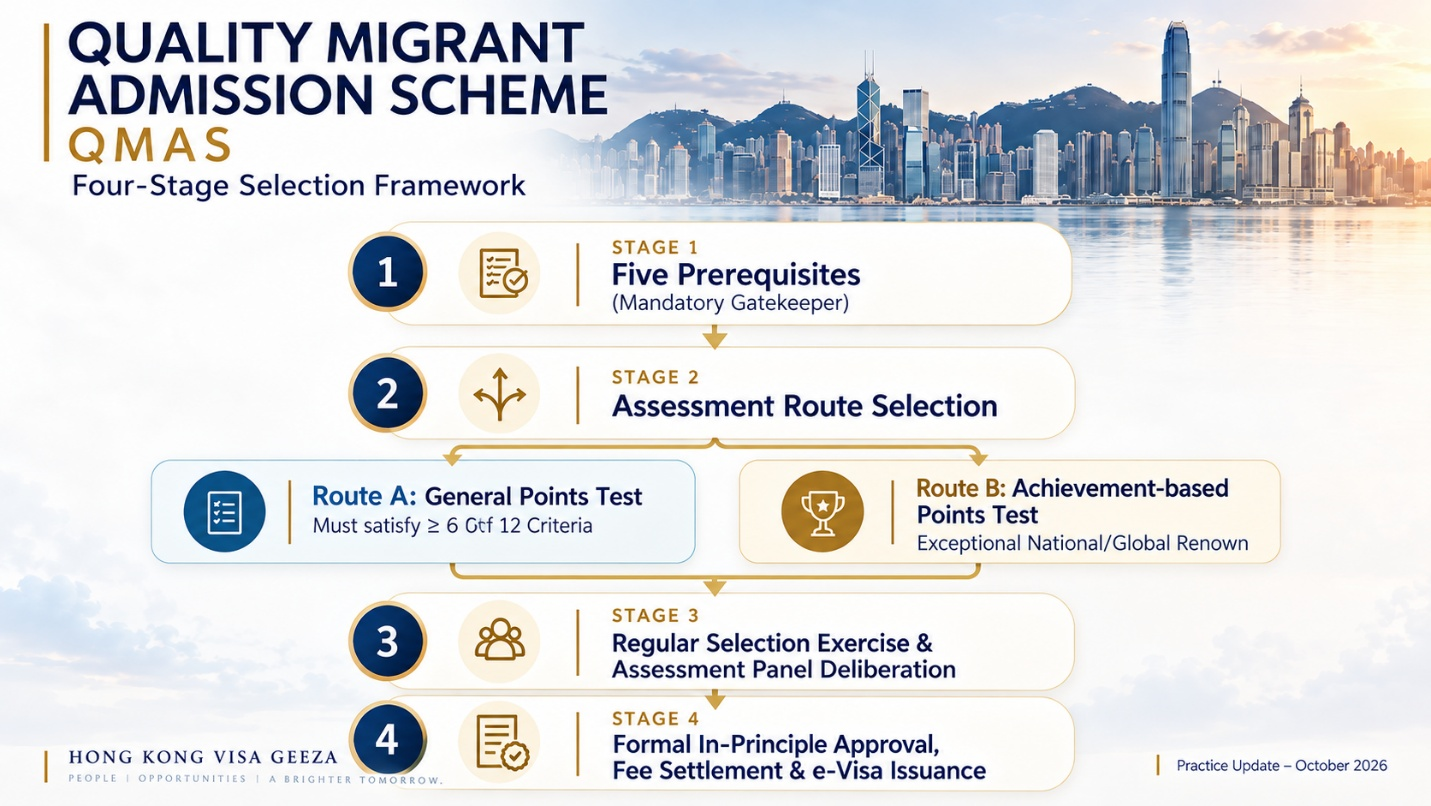
Stage 1: The Five Statutory Prerequisites
As set out in the ImmD QMAS Guidance Notes (Form ID(E) 982), failure to strictly document any one of these five elements triggers an immediate administrative refusal:
- Age: The applicant must be aged 18 or above at the date of application submission.
- Financial Standing: The applicant must prove sufficient independent net worth to accommodate and support themselves and all declared dependants for at least the initial 12 months in Hong Kong without relying on public assistance (evidenced via unencumbered liquid deposits, stocks, or realisable securities).
- Good Character: No criminal conviction record or adverse immigration track record in Hong Kong or internationally.
- Language Proficiency: Demonstrated proficiency in at least two languages (written and spoken). Following the 2024 adjustments, the scheme formally recognises dual-language proficiencies without mandating Chinese-language competency.
- Basic Educational Qualifications: A first degree from a recognised university or tertiary educational institution. In exceptional circumstances, outstanding technical qualifications or proven professional accomplishments backed by conclusive documentary evidence may be considered.
Stage 2: Assessment Routes
Route A: The General Points Test (“GPT” – 12 Objective Criteria)
Applicants under the GPT must satisfy a minimum threshold of 6 out of the 12 criteria across 6 discrete categories:
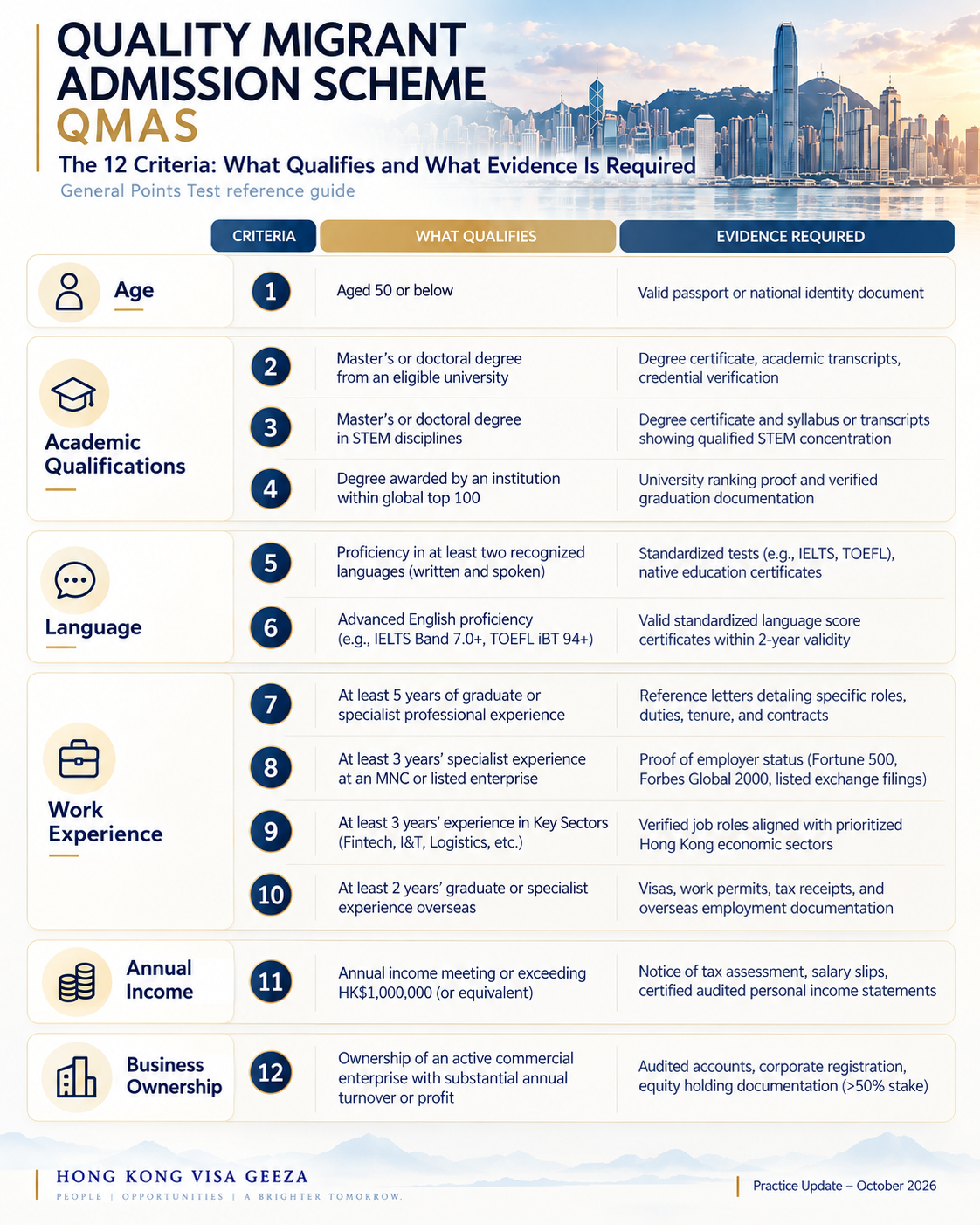
Practice Note: Stephen Barnes in his advisory practice at hongkongvisageeza.com, “meeting the minimum threshold of 6 criteria is merely a jurisdictional entry ticket into the selection exercise. The Assessment Panel explicitly gives preference to profiles matching 8 or more criteria or those whose experience aligns directly with the Chief Executive’s strategic economic sectors.”
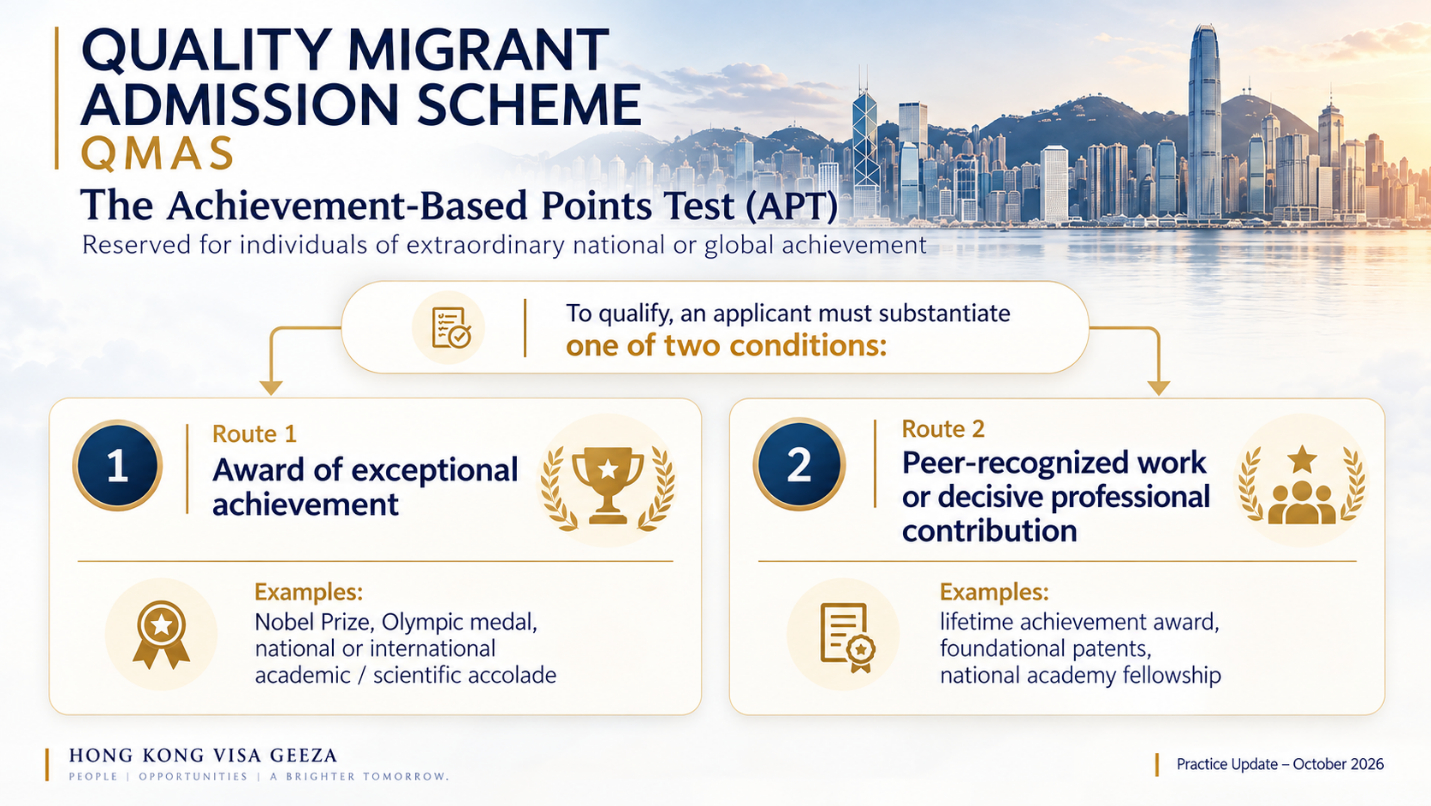
Route B: The Achievement-Based Points Test (APT)
Detailed on the Official ImmD Quality Migrant Admission Scheme Portal, this route is reserved for individuals of extraordinary, globally or nationally recognized achievement. To qualify, an applicant must substantiate one of two conditions:
Stage 3: Selection Exercises & The High-Level Assessment Panel
Selection exercises are scheduled regularly by ImmD. Eligible applications are submitted to the Assessment Panel, chaired by the Secretary for Labour and Welfare and composed of relevant policy bureau secretaries. The Panel conducts a holistic review of:
- Local workforce shortages across key sectors;
- Hong Kong’s current socio-economic imperatives;
- Applicant background, specialization, corporate track record, and potential to establish high-value economic roots.
The Director of Immigration makes the final selection on a merit basis, advised by the Panel’s deliberations.
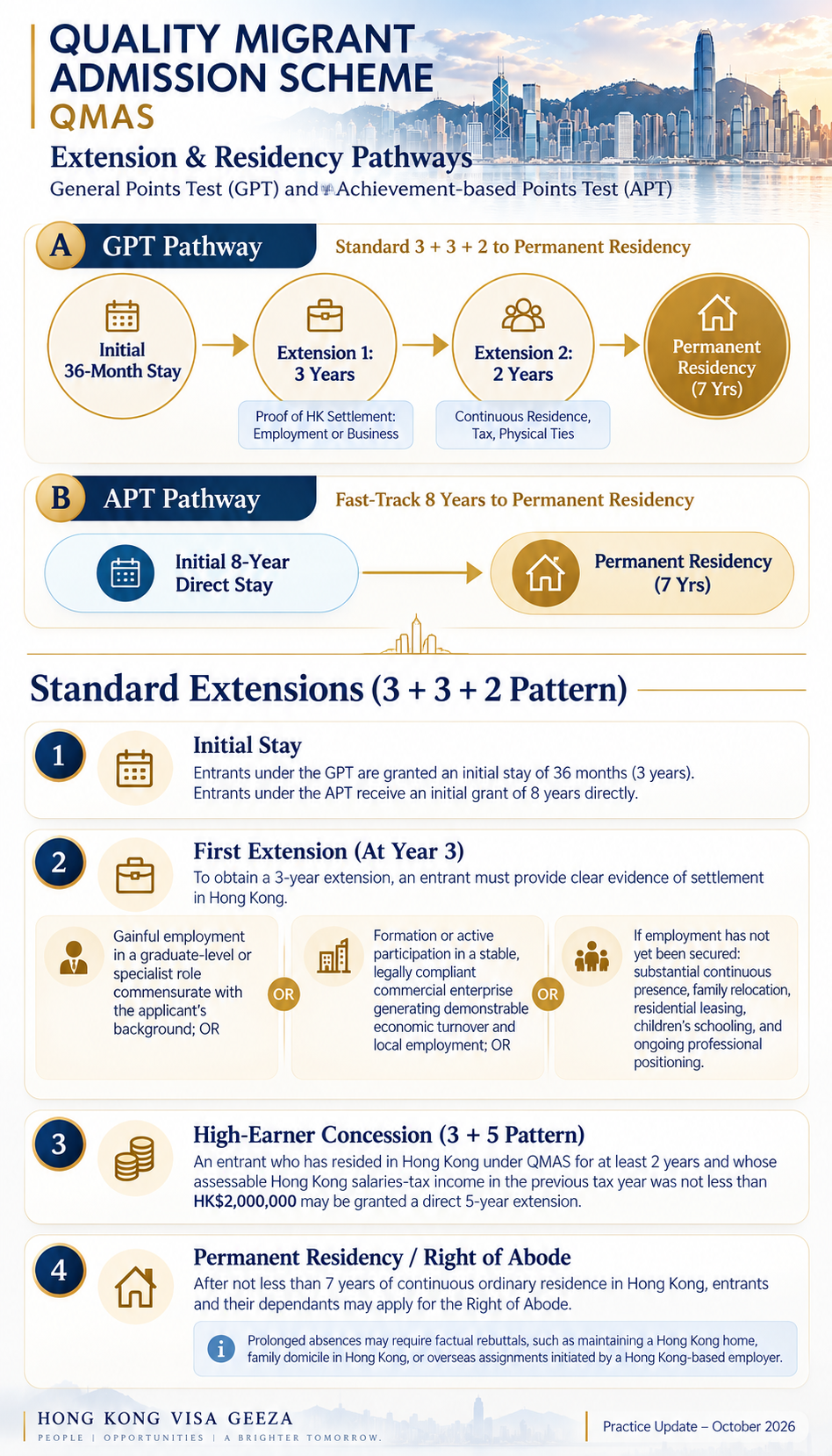
Stage 4: Extension of Stay Dynamics & The “Ordinary Residence” Test
One of the most misunderstood facets of QMAS is the extension process. While the initial visa does not require prior local employment, subsequent extensions are strictly scrutinized to verify that the entrant has taken genuine, concrete steps to settle in Hong Kong.
Controversies, Statistical Trends & LegCo Scrutiny
Throughout its existence, QMAS has generated intense political, administrative, and academic scrutiny within the Legislative Council (LegCo).
The “Quality Mainland Migrant” Demographic Imbalance
Official statistics published periodically by the ImmD in LegCo Records on Talent Admission Schemes (LCQ11) reveal that Mainland Chinese nationals have historically accounted for 75% to 85%+ of all QMAS visa approvals.
According to the Hong Kong Visa Geeza, Stephen Barnes in his analysis on hongkongvisageeza.com, this dynamic converted the program into what was colloquially dubbed the “Quality Mainland Migrant Admission Scheme”. While critics argued the scheme failed to globalise the city’s talent pool, the government maintained that Hong Kong’s role as the premier financial bridge between Mainland China and global capital markets made high-calibre bilingual Mainland talent essential to local economic expansion.
The Retention and Tax Gap (“Absentee Migrants”)
A recurrent controversy raised in LegCo finance and manpower panel sessions was the low rate of subsequent tax filings and extension drop-offs among admitted entrants. Historically, many successful entrants treated the initial QMAS visa as a speculative hedge—an option for future mobility—without physically relocating their households, leasing homes, or paying Hong Kong Salaries Tax. The 2024 reform explicitly introduced strict verification at the first renewal stage, ensuring that “passive holders” who do not tangibly settle in the HKSAR face refusal upon seeking an extension.
Exploitation by Unlicensed Agencies & The Indian Subcontinent Scams
Because QMAS historically operated on a self-assessed points scale, offshore immigration brokers often misled applicants by falsely portraying the 80-point pass mark as a “guaranteed visa.” In prominent industry exposés, such as the Indian QMAS Visa Agency Scam investigation, Stephen Barnes documented predatory practices by overseas operators charging heavy upfront fees to applicants with standard qualifications, falsely promising state-arranged employment and residence. The ImmD’s subsequent transition to an authenticated 12-criterion framework and digital authentication services has severely curtailed such broker exploitation.
Overlap with the Top Talent Pass Scheme (TTPS)
Following the launch of the TTPS in December 2022 (which targets HK$2.5M earners and graduates of the world’s top 100 universities on rapid 4-week processing turnarounds), QMAS experienced a sharp decline in direct applications from top-tier graduates. In response, the Government reformed the QMAS assessment mechanism to complement TTPS rather than compete with it: TTPS serves fast-track entry for top earners and elite alumni, while QMAS evaluates mid-career specialists, innovators, and seasoned corporate leaders through structured, multi-dimensional assessment.
Practical Case Studies From Our Practice
Case Study 1: The STEM Innovator with High Executive Backing
Profile: A 38-year-old artificial intelligence research manager working at a US Fortune 500 company, holding a Master’s degree in Data Science from a US university (top-50 global ranking). Earns ~HK$1.2M equivalent.
Criterion Match (7 of 12 Criteria):
Criterion 1 (Age ≤ 50)
Criterion 2 (Master’s Degree)
Criterion 3 (STEM Concentration)
Criterion 4 (Top-100 Global University)
Criterion 5 (Dual Language: English + Hindi)
Criterion 7 (5+ Years Specialist Experience)
Criterion 8 (Multinational/Listed Firm Experience)
Advisory & Outcome: Successfully selected within two selection exercises. The presence of published applied patents and experience in AI (a government priority sector) secured strong support from the Assessment Panel.
Case Study 2: The Mid-Career Finance Specialist (The Rejection Risk)
Profile: A 42-year-old corporate banker holding a Bachelor of Arts in Economics from a standard regional state university. 15 years of general commercial banking experience in domestic retail banks.
Criterion Match (3 of 12 Criteria):
Criterion 1 (Age ≤ 50)
Criterion 5 (Bilingual)
Criterion 7 (5+ Years Specialist Experience)
Advisory & Outcome: Ineligible under the post-November 2024 system. According to the Hong Kong Visa Geeza, Stephen Barnes, applicants lacking elite educational pedigrees or tier-one multinational corporate backgrounds can no longer “pad” points through general work history. The applicant was directed instead toward an employer-sponsored General Employment Policy (GEP) work visa following a structured local job search.
Admission of Dependants
Procedural Guide
An entrant admitted to Hong Kong under the Quality Migrant Admission Scheme (QMAS) is legally recognized as a principal sponsor entitled to bring eligible family members to the HKSAR under the established Dependant Visa Policy administered by the Director of Immigration under Section 11 of the Hong Kong Immigration Ordinance (Cap. 115).
While the principal applicant’s assessment focuses on individual merit, academic pedigree, professional background, and strategic economic value, the admission of dependants operates under distinct statutory family-reunification criteria and specific financial viability benchmarks.
Eligible Dependant Categories
Under current HKSAR immigration regulations, a QMAS sponsor may apply to bring the following qualifying dependants:
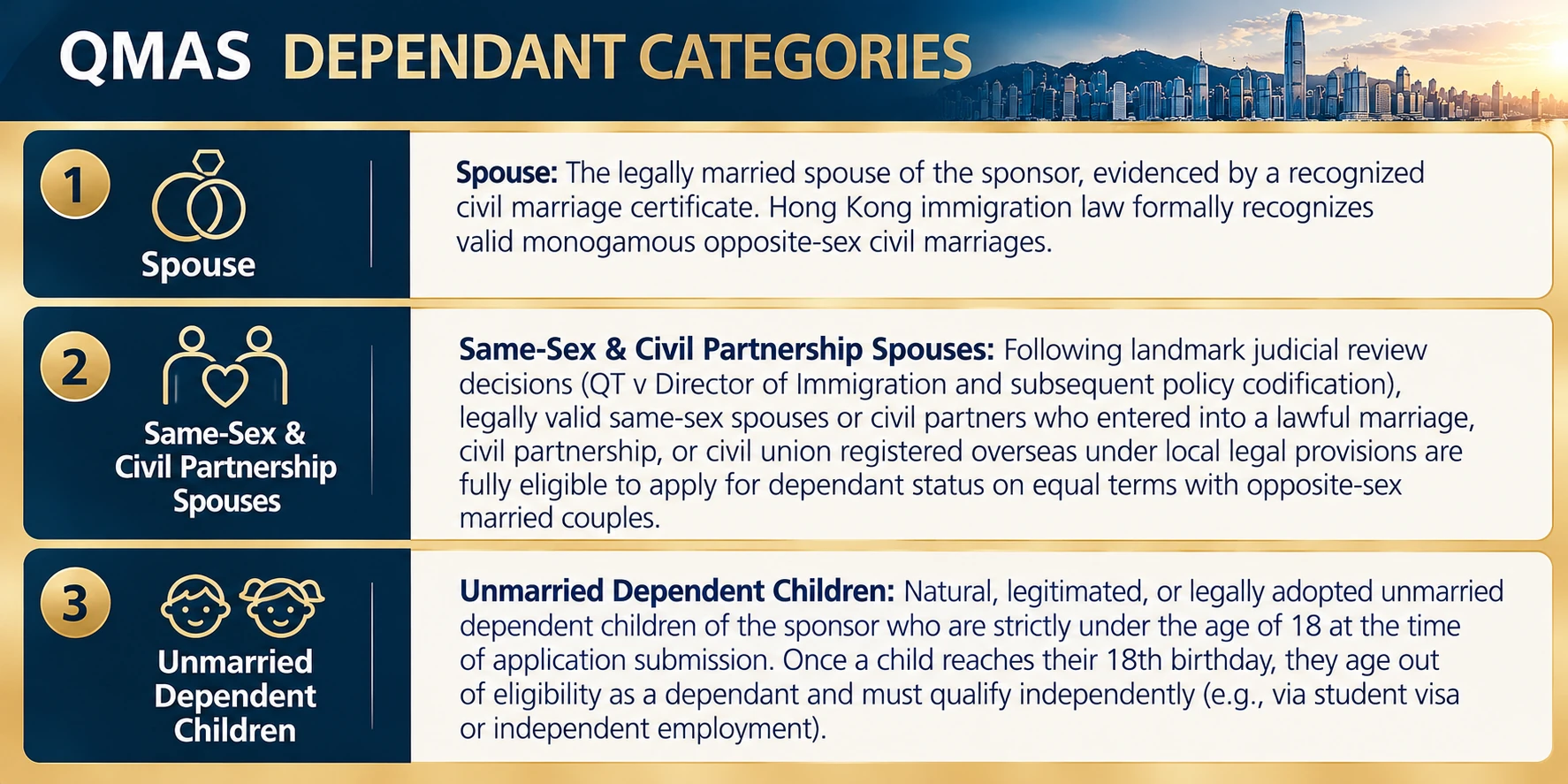
Practice Note: Stephen Barnes, the Hong Kong Visa Geeza, notes “Unlike permanent residents, a temporary resident sponsor under QMAS is not permitted to sponsor elderly dependent parents (aged 60+) for dependant visas. Parents may only visit Hong Kong on standard visitor conditions of stay or seek alternative arrangements until the sponsor successfully acquires the Right of Abode (Permanent Residency).”
Core Prerequisites for Sponsoring Dependants
Pursuant to the ImmD Dependant Visa Policy Guidelines, the Director of Immigration evaluates dependant applications against four foundational legal hurdles:
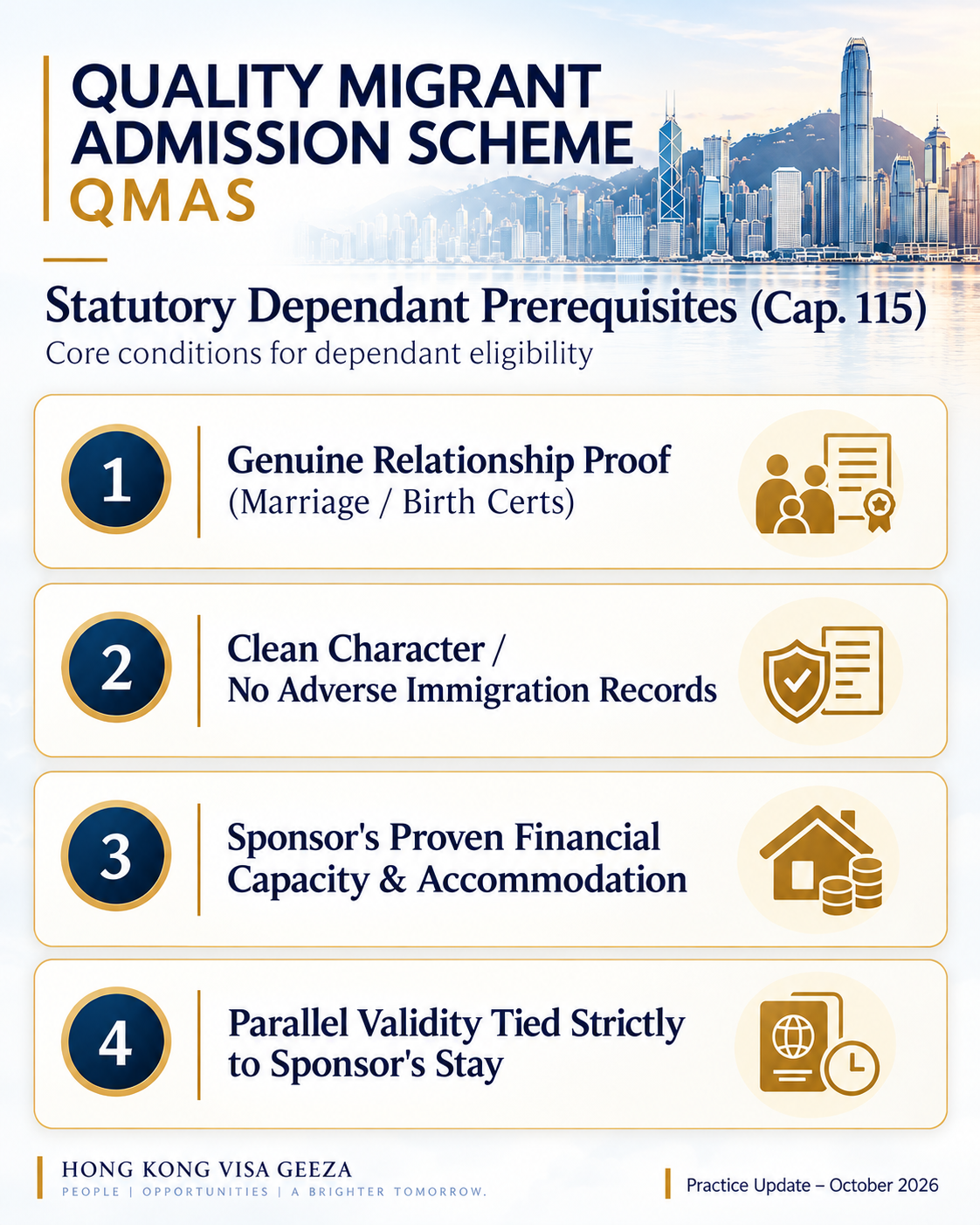
- Proof of Genuine Relationship: Incontrovertible documentary evidence substantiating a bona fide legal relationship between the sponsor and the dependant (apostilled/attested marriage certificates, birth certificates with explicit parental details, and legal adoption decrees).
- No Adverse Track Record: The dependant must have no known record of serious criminal convictions or adverse immigration compliance issues in Hong Kong or internationally.
- Adequate Financial Means & Accommodation: The sponsor must establish that they possess the independent financial means to accommodate and support their dependants well above the subsistence level without recourse to public funds. The living premises arranged or intended must be suitable and adequate for the entire family unit.
- Valid Principal Status: The dependant’s grant of stay is entirely parasitic upon the principal sponsor’s valid lawful permission to remain in Hong Kong.
Application Timing & Submission Strategy
Dependants may be submitted to the Immigration Department via two strategic pathways:
- Concurrent Submission (Recommended): Submitted simultaneously alongside the principal sponsor’s initial QMAS application via the GovHK Electronic Services Portal. The dependants’ details, identity documents, marriage certificates, and birth certificates are uploaded directly within the unified family dossier. If the principal applicant is selected and granted in-principle approval, the dependants’ visas/entry permits are issued concurrently upon settlement of the prescribed visa fees.
- Subsequent “Join-in” Submission: Submitted at a later date after the principal applicant has already arrived and activated their QMAS status. While legally permitted, this requires filing standalone application forms (Form ID 997), updated proof of the sponsor’s Hong Kong residential tenancy, and current local financial/employment substantiation, which introduces an additional 6 to 8-week vetting period.
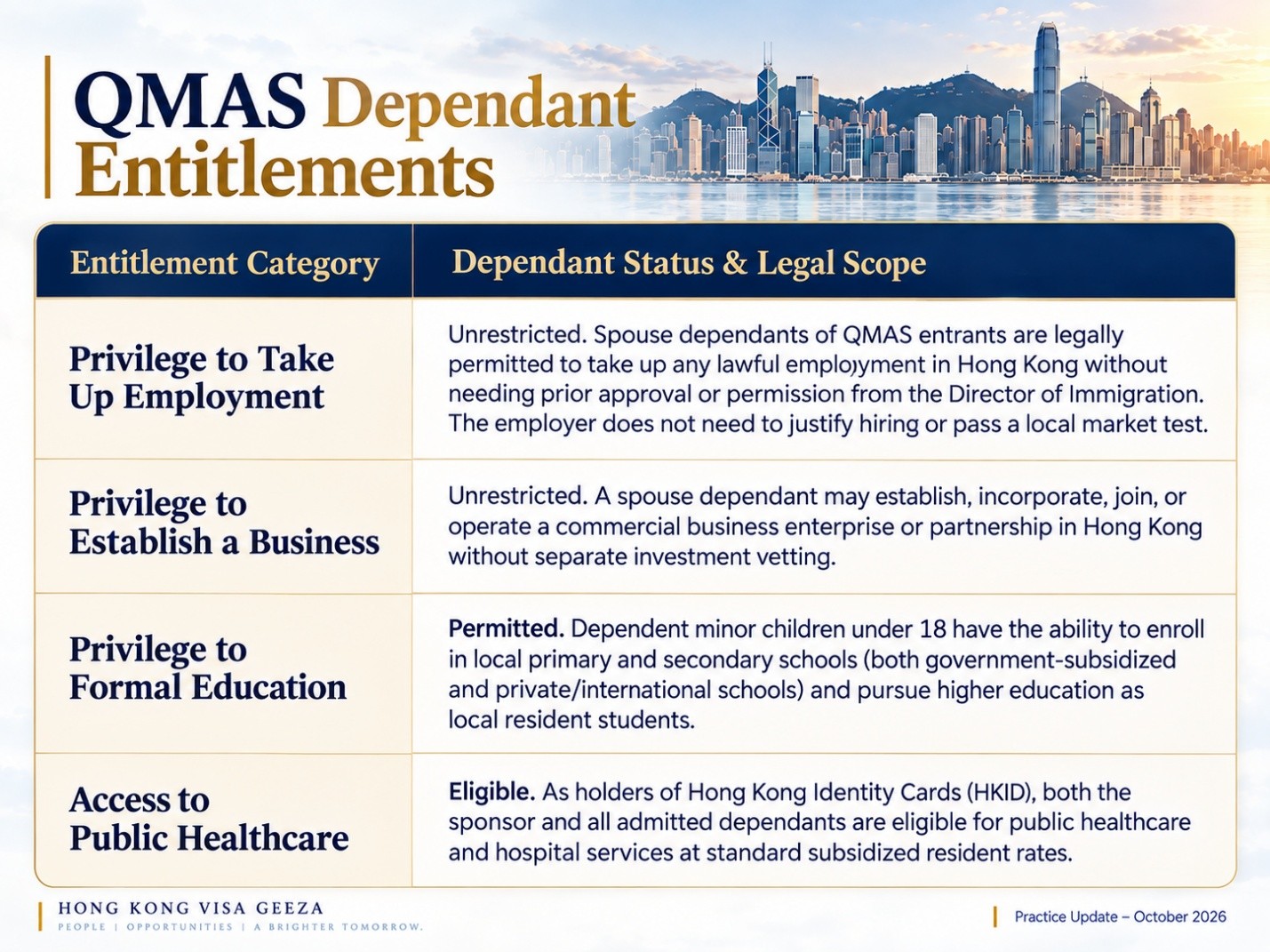
Privileges: Employment, Business & Education
Dependants admitted under QMAS enjoy expansive statutory rights compared to dependants under other immigration schemes across Asia:
Extensions of Stay & Downstream Settlement Dynamics
The mechanics of maintaining, renewing, and converting dependant status require careful management:
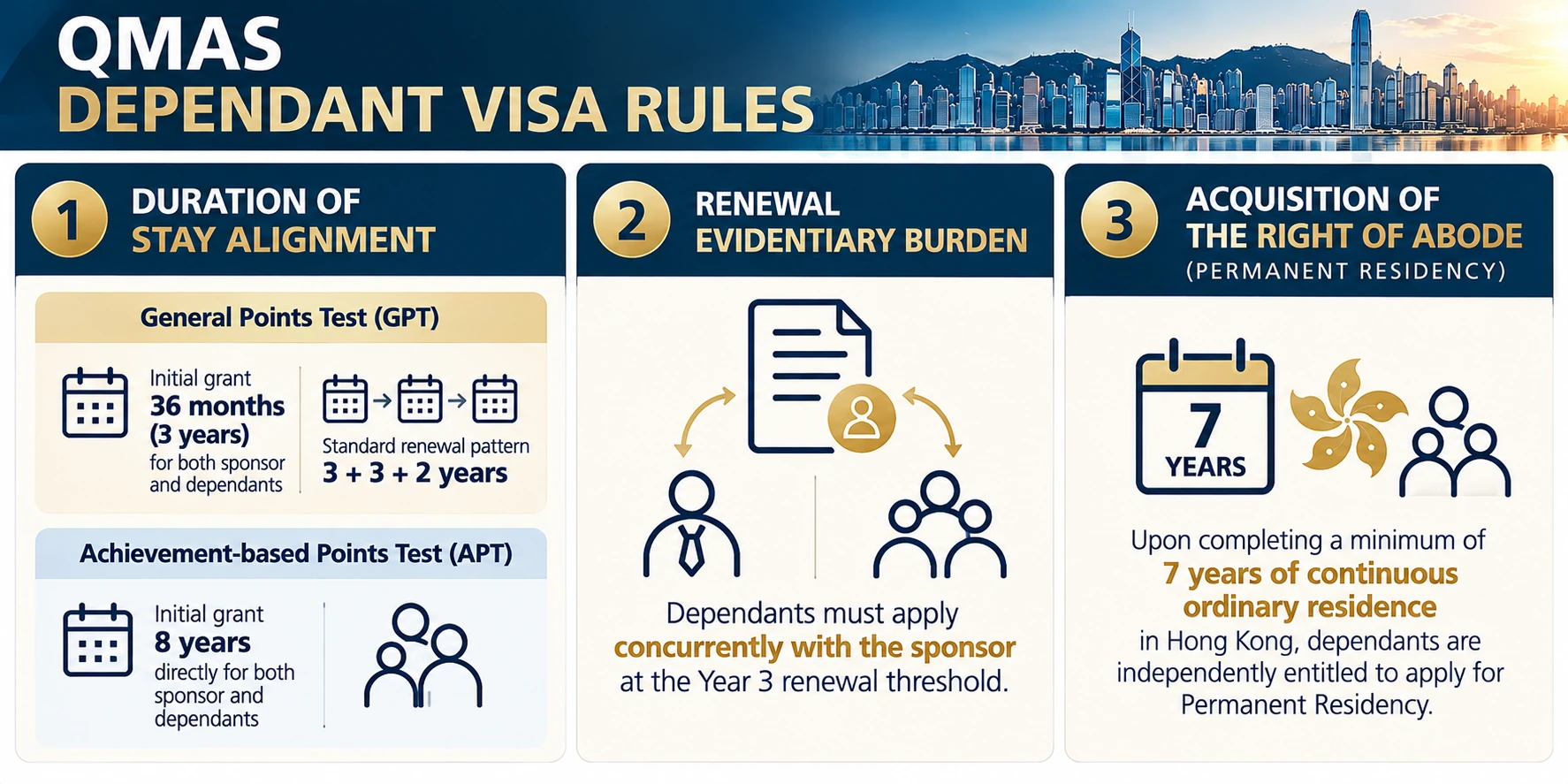
Duration of Stay Alignment: The validity period of a dependant visa is strictly tied to that of the principal sponsor. Under the modern General Points Test (GPT) framework:
- Initial grant: 36 months (3 years) for both the sponsor and dependants.
- Standard renewal pattern: 3 + 3 + 2 years.
- Under the Achievement-based Points Test (APT): Initial grant is 8 years directly for both the sponsor and dependants.
Renewal Evidentiary Burden: At the Year 3 renewal threshold, dependants must apply concurrently with the sponsor. If the principal sponsor fails to demonstrate genuine settlement, gainful specialist employment, or operational commercial activity in Hong Kong, the sponsor’s extension will be refused, automatically terminating the dependants’ legal status regardless of whether the spouse is working locally or the children are enrolled in school.
Acquisition of the Right of Abode (Permanent Residency): Upon completing a minimum of 7 years of continuous ordinary residence in Hong Kong, dependants are independently entitled to apply for Permanent Residency under Schedule 1 to Cap. 115. Crucially, each family member is assessed individually on their own physical residency footprint. If a principal sponsor travels extensively for international business while the spouse and children remain continuously rooted in Hong Kong (maintaining home tenancies, schooling, and tax compliance), the dependants may satisfy the 7-year ordinary residence test even if the sponsor encounters friction.
Strategic Insights from Practice: Common Pitfalls
According to the Hong Kong Visa Geeza, Stephen Barnes, sponsoring dependants under QMAS involves practical traps that official checklists routinely fail to articulate: “While official government portals depict the admission of dependants under QMAS as an almost clerical formality, the operational reality on the ground is fraught with structural traps. The Immigration Department grants initial entry with relative ease, but the entire family unit remains strictly parasitic upon the principal sponsor’s ability to prove genuine, ongoing economic settlement. If the principal fails to establish a verifiable, tax-paying commercial or employment footprint in the HKSAR by Year 3, the entire family’s legal status collapses overnight—regardless of how deeply rooted the children are in local schools or whether the spouse has built a career here.”
The “Mainland Resident Dependant” Exit Formalities: For principal sponsors who are Mainland Chinese residents, admitted dependants holding Mainland household registration must obtain an Exit-Entry Permit for Travelling to and from Hong Kong and Macao (EEP) endorsed with the appropriate “D” (Dependant) exit endorsement from their local Public Security Bureau (PSB) before they can activate their Hong Kong dependant e-Visas.
The Post-Turn-18 Cliff Edge: If a dependent child turns 18 before their initial dependant application is formally submitted, they are irrevocably barred from the dependent scheme. For families with children aged 16–17, applications must be timed with precision to ensure formal submission prior to the child’s 18th birthday. Moreover, the closer these kids are to 18, the more likely its is that ImmD will seek firm evidence that they are in fact dependent on their parents. Working children under the age of 18 will more than likely not qualify.
Marital Breakdown & Status Cancellation: Because a dependant spouse’s status is legally contingent on the continuation of the marriage, a decree absolute of divorce terminates the statutory basis of the dependant visa. The former spouse must either depart Hong Kong upon expiry of their current limit of stay or secure independent visa status (such as an employment-sponsored GEP visa or company-founding investment visa).
Official Sources & Key References
All primary source materials and official HKSAR portals governing the Quality Migrant Admission Scheme are directly accessible through the following authenticated endpoints:
- The administrative overview, operational mandate, and eligibility parameters are maintained directly on the Official ImmD Quality Migrant Admission Scheme Portal.
- Departmental interpretations, evidentiary requirements, and procedural instructions are detailed in the ImmD QMAS Comprehensive FAQ Database.
- Formal applicant instructions, document checklists, and submission rules are codified within the ImmD QMAS Guidance Notes (Form ID(E) 982).
- Executive policy pronouncements, including the structural transition away from the 245-point matrix, were promulgated in the HKSAR Government Press Release on the Overhaul of QMAS and TTPS.
- Official immigration statistics, historical approval percentages, and demographic breakdowns are indexed in the LegCo Records on Talent Admission Schemes (LCQ11).
- Prioritized economic professions and specialist competencies eligible for expedited vetting are cataloged under the Hong Kong Talent List Administration Portal.
More Stuff You Find Useful or Interesting
Below are 7 core practical articles, advisories, and multimedia analyses published on the Hong Kong Visa Geeza library. Each entry features a comprehensive two-paragraph comparative assessment examining the historical perspective versus the definitive 2026–27 legal position.
Considering QMAS in Hong Kong – Visa Guide Overview
Comparative Analysis (Practical Reality vs. Statutory Theory):
In the baseline analysis on Considering QMAS in Hong Kong – Visa Guide Overview, the discussion centers on establishing realistic client expectations regarding discretionary immigration vetting under Cap. 115. According to the Hong Kong Visa Geeza, Stephen Barnes, applicants routinely conflate paper eligibility under official guidelines with actual selection probability. The statutory literature published by the Immigration Department has historically framed the points test as an open qualification ladder, leading prospective migrants to believe that achieving the minimum passing score provides an actionable guarantee of entry. In practice, however, QMAS operates as a competitive talent-filtering mechanism where the vast majority of qualifying applicants are never selected. The government evaluates candidates not in a vacuum, but against the immediate socio-economic imperatives of the HKSAR and the prevailing talent pool in any given cycle. The Visa Geeza’s early guidance exposed the fundamental chasm between ImmD’s procedural neutrality and the selective reality of committee deliberations, establishing an essential foundation for foreign professionals seeking to relocate to Hong Kong without prior employment sponsorship.
PRACTICE UPDATE Correlation:
In this PRACTICE UPDATE, that foundational insight is directly elevated into the post-November 2024 operating architecture, where subjective points scoring has been entirely dismantled. As stated by the Hong Kong Visa Geeza, Stephen Barnes, the replacement of the legacy 245-point calculation with 12 objective, binary criteria has permanently reshaped client positioning. Meeting 6 of the 12 criteria is now strictly a jurisdictional gateway; it does not confer a competitive edge. The new Ministerial Assessment Panel chaired by the Secretary for Labour and Welfare exercises targeted discretion, prioritizing individuals with postgraduate STEM credentials, top-100 global academic pedigrees, and verifiable corporate executive backgrounds. While the original guide warned against relying on the 80-point pass mark, this 2026–27 update demonstrates that modern vetting is more uncompromising than ever: applicants failing to present elite academic credentials or direct alignment with Hong Kong’s strategic innovation and financial sectors will be eliminated at the initial administrative screening phase.
10 Must-Have Resources for a Hong Kong Quality Migrant Admission Scheme Visa Application
Comparative Analysis (Practical Reality vs. Statutory Theory):
Examining practical preparation in 10 Must-Have Resources for a Hong Kong Quality Migrant Admission Scheme Visa Application, the focus lies on the rigorous evidentiary burden required to withstand ImmD scrutiny. According to the Hong Kong Visa Geeza, Stephen Barnes, prospective migrants often treat immigration applications as clerical paperwork exercises, underestimating the forensic documentation required to prove assets, experience, and professional standing. Official government forms provide minimalist checklists that fail to explain how evidence is actually weighted during review. A standard reference letter lacking a detailed breakdown of specialist duties, managerial scope, and corporate standing invariably fails to satisfy vetting officers. Similarly, general bank balances that lack liquidity proof or clear ownership documentation trigger immediate procedural delays or outright rejections. The resource guide bridges this information asymmetry by outlining the concrete legal and documentary architecture needed to assemble an unassailable evidentiary bundle, ensuring that candidates present undeniable proof rather than ambiguous assertions of professional competence.
PRACTICE UPDATE Correlation:
This PRACTICE UPDATE supersedes historical document preparation methodologies by integrating the digital filing requirements and binary evidentiary standards introduced in late 2024. As observed by the Hong Kong Visa Geeza, Stephen Barnes, the complete migration to digital document upload portals and the elimination of paper dossiers have removed opportunities for ambiguous narrative persuasion. Every single criterion claimed among the 12 modern benchmarks—such as Criterion 8 (multinational enterprise experience) or Criterion 11 (audited personal annual income of HK$1M+)—must be backed by incontrovertible, authenticated documentation. Under the current regime, ImmD no longer engages in prolonged correspondence to clarify defective evidence; deficient uploads trigger prompt administrative refusals. This definitive update integrates the essential documentary lessons of the past with the exacting electronic verification standards required in 2026–27, providing practitioners with a precise roadmap for evidence assembly.
IT’S OFFICIAL: The Quality Mainland Migrant Admission Scheme – 77% of All QMAS Visas Go to Chinese Nationals!
Comparative Analysis (Practical Reality vs. Statutory Theory):
The statistical realities explored in IT’S OFFICIAL: The Quality Mainland Migrant Admission Scheme – 77% of All QMAS Visas Go to Chinese Nationals! address the stark demographic disparity defining QMAS approvals. According to the Hong Kong Visa Geeza, Stephen Barnes, while official government press releases consistently branded QMAS as an international initiative to recruit global talent from across Europe, North America, and Australasia, official LegCo statistical replies revealed that over three-quarters of all quota allocations were absorbed by Mainland Chinese nationals. This empirical disconnect exposed the tension between official policy rhetoric and administrative reality. Hong Kong’s integration with the Greater Bay Area and its role as an offshore capital bridge naturally favored bilingual Mainland professionals possessing elite educational credentials and deep regional commercial networks. The Visa Geeza’s analysis cut through public relations spin, warning international expatriates that they were entering a talent pool heavily dominated by Mainland candidates whose profiles aligned closely with local corporate demand.
PRACTICE UPDATE Correlation:
In this PRACTICE UPDATE, demographic analysis is contextualized within the current uncapped talent environment and the concurrent rise of the Top Talent Pass Scheme (TTPS). As highlighted by the Hong Kong Visa Geeza, Stephen Barnes, Mainland dominance within QMAS has deepened, with Chinese nationals now routinely accounting for between 80% and 90% of successful allotments. The revised 12-criterion framework directly codifies this demographic trend: mandatory bilingual requirements and specific points incentives for Greater Bay Area industrial and financial sectors heavily favor Mainland professionals. For non-Mainland expatriates, this definitive update provides a crucial strategic takeaway: Western and international applicants cannot rely on general professional backgrounds. To succeed in 2026–27, international candidates must leverage specialized STEM credentials, senior management positions in global Fortune 500 corporations, or unique technological intellectual property that cannot be sourced from the regional talent market.
What Are The Chances Of Successfully Securing A QMAS Visa?
Comparative Analysis (Practical Reality vs. Statutory Theory):
In the strategic advisory piece What Are The Chances Of Successfully Securing A QMAS Visa?, the discussion delivers a frank probabilistic evaluation of candidate viability. According to the Hong Kong Visa Geeza, Stephen Barnes, public perception of QMAS has long been distorted by commercial immigration agents who treat the program as a volume-driven lottery, advising virtually anyone with a university degree to apply. In reality, historical selection rates consistently hovered between 15% and 25% of submitted applications. ImmD selection officers and the Advisory Committee routinely rejected thousands of technically qualifying applicants whose profiles offered no exceptional, demonstrable economic value to Hong Kong. The article dissected the subjective, unwritten assessment criteria applied during vetting exercises, cautioning prospective applicants that meeting the administrative pass mark was merely an invitation to be judged, not an assurance of selection.
PRACTICE UPDATE Correlation:
Addressing these probability dynamics, this PRACTICE UPDATE explains how the 2024 reforms have completely transformed the statistical landscape. As articulated by the Hong Kong Visa Geeza, Stephen Barnes, the elimination of the 245-point scale and the introduction of the 6-out-of-12 criteria pass mark has eliminated borderline, low-scoring applications from the system entirely. By establishing clear prerequisite criteria—such as requiring a Master’s or Doctoral degree, top-100 university credentials, or an annual income exceeding HK$1M—the scheme automatically filters out candidates who previously submitted speculative filings. Consequently, while overall application volumes have rationalized, the selection standard among qualifying submissions is exceptionally rigorous. This update details how practitioners must assess client viability under the new framework: scoring exactly 6 criteria results in high rejection risk, whereas securing 8 or more verified criteria provides a competitive basis for selection by the Ministerial Assessment Panel.
Is There Such a Thing as an ‘Occupations in Demand’ List for a Hong Kong QMAS Application?
Comparative Analysis (Practical Reality vs. Statutory Theory):
The occupational evaluation explored in Is There Such a Thing as an ‘Occupations in Demand’ List for a Hong Kong QMAS Application? examines whether specific vocations enjoy institutional preference under Hong Kong immigration law. According to the Hong Kong Visa Geeza, Stephen Barnes, for the first twelve years of QMAS, Hong Kong maintained no official shortage list, operating entirely on broad qualitative discretion that left applicants guessing which specializations were favored. When the first Hong Kong Talent List was formally promulgated in 2018 with 11 specific professions, it established an official mechanism for granting 30 bonus points. However, Barnes cautioned that the Talent List was not an exclusive prerequisite; many applicants mistakenly believed that inclusion was mandatory, while others failed to recognize that qualifying for the list required meeting exacting academic, licensing, and experience benchmarks that went far beyond basic job titles.
PRACTICE UPDATE Correlation:
Within this PRACTICE UPDATE, the role of occupational prioritization is re-examined under the modern 12-criterion architecture. As confirmed by the Hong Kong Visa Geeza, Stephen Barnes, the legacy 30-point Talent List bonus has been replaced by Criterion 9, which evaluates whether an applicant possesses at least 3 years of specialist experience within government-prioritized Key Sectors (including artificial intelligence, biotechnology, fintech, and advanced manufacturing). The expansive Talent List—which grew to cover over 60 professional disciplines—now serves as an analytical reference rather than a rigid points booster. This practice update clarifies how practitioners must document an applicant’s occupational alignment: candidates must prove not merely that their general industry matches a priority area, but that their specific operational role directly addresses critical technical skills gaps recognized by the Labour and Welfare Bureau.
The Ongoing Indian QMAS Visa Agency Scam, Rip Off, Fraud
Comparative Analysis (Practical Reality vs. Statutory Theory):
The investigative expose in The Ongoing Indian QMAS Visa Agency Scam, Rip Off, Fraud documented the predatory practices of unlicensed overseas immigration brokers exploiting unsuspecting professionals across South Asia. According to the Hong Kong Visa Geeza, Stephen Barnes, these agencies aggressively marketed QMAS as a guaranteed migration and work pathway, falsely telling prospective applicants that meeting the 80-point pass mark entitled them to automated visas, guaranteed high-paying local employment, and subsidized housing in Hong Kong. Vulnerable applicants paid thousands of US dollars in non-refundable consulting fees, only to receive generic rejections from ImmD months later. The investigation unmasked the fraudulent mechanics of these operators, highlighting that the HKSAR Government has never authorized overseas agents, that point calculations confer no legal entitlement, and that the Director of Immigration exercises absolute discretionary authority over all talent selections.
PRACTICE UPDATE Correlation:
This PRACTICE UPDATE examines how the post-November 2024 reforms have dealt a decisive blow to predatory immigration agencies. As emphasized by the Hong Kong Visa Geeza, Stephen Barnes, by eliminating subjective self-scoring matrices and transitioning to 12 objective, verifiable criteria, ImmD removed the ambiguity that unscrupulous brokers previously exploited to deceive clients. Under the current digital application protocol, applicants must substantiate criteria such as top-100 university graduations (Criterion 4) and certified high-bracket earnings (Criterion 11) using primary source documentation and authenticated verification bodies before submissions can proceed. This update reinforces ethical practitioner standards, providing transparent, unvarnished guidance that protects prospective migrants from commercial fraud and establishes clear benchmarks for evaluating legitimate prospects under the 2026–27 regime.
Blog Archive – Strategic Immigration Insights Across Hong Kong Practice
Comparative Analysis (Practical Reality vs. Statutory Theory):
Reviewing decades of accumulated casework within the Hong Kong Visa Geeza Blog Archive, the central recurring theme is the necessity of adopting an integrated, strategic view of Hong Kong immigration rather than viewing visa schemes in isolation. According to the Hong Kong Visa Geeza, Stephen Barnes, applicants and inexperienced practitioners frequently fixate on securing the initial entry visa, completely failing to anticipate downstream settlement and permanent residency requirements. While official government portals emphasize talent entry numbers, the archive documents the ongoing friction of immigration practice: the strict evidentiary demands of the 3-year extension of stay, the complexities of sponsoring dependants, and the rigorous interpretation of Section 2(4)(b) of Cap. 115 regarding “ordinary residence” for the 7-year Right of Abode. The accumulated case studies demonstrate that an entry visa is merely the opening step in a multi-year legal process requiring consistent physical, fiscal, and professional ties to Hong Kong.
PRACTICE UPDATE Correlation:
Synthesizing those decades of professional insight, this PRACTICE UPDATE provides the definitive master operational blueprint for managing a QMAS application from initial submission through to permanent residency. As detailed by the Hong Kong Visa Geeza, Stephen Barnes, the modern 3+3+2 extension pattern under the GPT (and the 8-year grant under the APT) requires strategic planning from day one. Entrants can no longer treat a QMAS visa as a passive travel convenience or a speculative hedge while maintaining primary residency abroad. At the Year 3 renewal threshold, ImmD requires verified proof of local settlement, gainful employment in a specialist role, or the establishment of a compliant operating business generating domestic employment. This definitive update connects initial qualification, documentary preparation, and long-term residency compliance into an integrated framework, cementing its position as the definitive practitioner guide for 2026–27.
VisaGeeza.Ai – Making Hong Kong Immigration A Lot Easier

VisaGeeza.Ai – 13 Years In The Making
Check Out VisaGeeza.Ai
All Our Know-How : All Our Experience : Fully Interactive
100% FREE!
Please select the social network you want to share this page with:

The Hong Kong Visa Geeza (a.k.a Stephen Barnes) is a co-founder of the Hong Kong Visa Centre and author of the Hong Kong Visa Handbook. A law graduate of the London School of Economics, Stephen has been practicing Hong Kong immigration since 1993 and is widely acknowledged as the leading authority on business immigration matters here for the last 24 years.

